Reviewing 1940s Fashionable Girl for Craft Fair Success
As an embroidery designer who has spent countless weekends behind a booth table, I know that the difference between a design that sits idle and one that sells out often comes down to immediate visual impact. When I first loaded the 1940s Fashionable Girl into my software, I was looking for more than just a cute image; I was looking for a reliable craft fair product anchor. This machine embroidery design offers a distinct redwork aesthetic that taps into the current nostalgia trend while maintaining a clean, stylish profile that appeals to a broad demographic of handmade lovers.
First Impressions and Visual Appeal
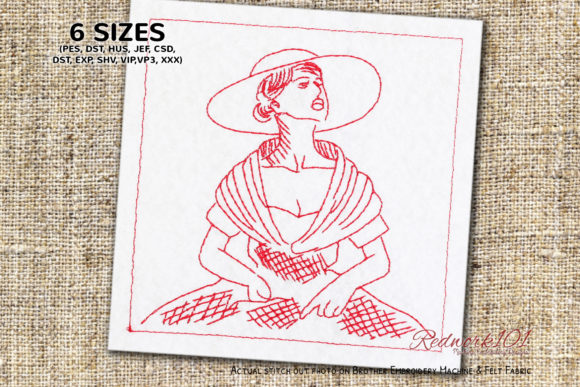
The immediate vibe of 1940s Fashionable Girl is elegant yet approachable. It does not scream "rustic" in the traditional farmhouse sense, nor does it feel overly modern or minimal. Instead, it strikes a balance that feels premium and decorative. The description notes it as a wonderful redwork embroidery, which suggests a single-color focus that relies on line work and shape rather than complex shading. This is crucial for booth visibility. From three feet away, customers need to understand what they are looking at instantly. The silhouette of a fashionable girl from the 1940s is recognizable and evokes a specific era of glamour that resonates with buyers looking for unique Accessories.
The optional Box Stitch mentioned in the product details is a smart inclusion. It allows us, as creators, to decide whether we want a framed, finished look or a floating motif. For a small shop product, this flexibility is invaluable. It means we can adapt the same embroidery file for different items without needing to purchase multiple variations.
Strategic Product Placement for Maximum Sales
When planning my craft fair inventory, I evaluate where a design will perform best. 1940s Fashionable Girl is versatile, but it shines brightest on specific handmade product categories. Here is how I would deploy this design across my table:
- Tote Bag Design: This is likely your highest volume seller. A canvas tote with this redwork design centered on the front becomes an instant statement piece. The simplicity of redwork ensures it reads well even from a distance.
- Apron Embroidery: Vintage-style aprons are perennial favorites. Placing the girl on the bib or near the pocket adds a charming, nostalgic touch that elevates a basic kitchen item into a giftable treasure.
- Tea Towel Embroidery: Redwork traditionally looks stunning on white linen or cotton towels. This design fits perfectly here, offering a classic look that appeals to buyers who appreciate traditional Embroidery techniques.
- Embroidered Patch: If you offer patches, this design’s clear lines make it ideal for iron-on or sew-on applications. It allows customers to customize their own jackets or bags, increasing engagement at your booth.
- Caps and Pouches: While possible, these require careful consideration of scale. The design must be resized appropriately to maintain clarity on curved surfaces or small fabric texture areas.
Production Practicality and Batch Efficiency
For those of us running a business, time is money. One of the strongest assets of 1940s Fashionable Girl is its potential for repeatable batch production. Because it is described as redwork, it likely utilizes fewer thread changes and less complex color matching than a full-color portrait. This reduces setup time between hoops. However, we must remain vigilant about stitch density. Even in redwork, if the lines are too close together, the fabric can pucker. Always check the digitizing quality before committing to a large run.
Photography is another critical factor. This design photographs exceptionally well for Etsy seller listings. The high contrast of red thread on light fabric creates a crisp image that pops on mobile screens. Creating a printable mockup or using digital design assets to showcase the design on various backgrounds can help online buyers visualize the finished product before they purchase.
Careful-Use Notes and Technical Considerations
While this design is robust, there are technical nuances to consider to ensure professional results. Since the description mentions the color of the outer elements and optional stitches, pay close attention to thread colors. Redwork traditionally uses red, but experimenting with navy, black, or deep green could open up new market segments. However, avoid using light threads on dark fabrics unless you are certain the digitizing includes proper underlay stitches to prevent the fabric from showing through.
Be cautious with tiny details. If the design includes fine lines representing hair or facial features, ensure your needle size matches the thread weight. A 75/11 needle is standard, but for very fine details, a sharper needle might be necessary. Also, consider the hoop size required. Ensure the design fits comfortably within your standard hoop without needing excessive re-hooping, which can lead to alignment issues in multi-item batches.
Textured towels can sometimes cause stitch distortion. If you are embroidering on waffle weave or heavy terry cloth, use a strong cut-away stabilizer to support the stitches. For smoother fabrics like cotton twill or linen, a tear-away stabilizer may suffice, but always test on scrap fabric first.
Enhancing Brand Consistency and Buyer Engagement
Using 1940s Fashionable Girl consistently across your product line helps build brand recognition. If a customer sees the same stylish motif on a tote, a patch, and a pillow cover, they begin to associate that aesthetic with your brand. This consistency strengthens your booth display, making it look curated and professional rather than random.
Buyer engagement increases when customers can see the versatility of a design. Displaying the same digital embroidery file applied to different items demonstrates value. It shows that you are not just selling a stitched item, but a cohesive style. This is particularly effective for commercial embroidery clients who may be looking for designs they can license or use in their own small businesses.
Final Designer Recommendations
Before you launch this design into your small shop product lineup, take these practical steps:
- Test on Scrap Fabric: Never skip this step. Check for puckering, thread breaks, or registration issues.
- Check Thread Contrast: Ensure the red (or chosen color) stands out clearly against your base fabric.
- Review Spacing: Verify that the optional Box Stitch does not crowd the main image.
- Confirm Hoop Size: Make sure the design fits your most commonly used hoops to streamline production.
- Inspect Stitch Density: Look for areas that are too dense and may cause fabric stiffness.
- Use the Right Stabilizer: Match the stabilizer to the fabric weight and texture.
- Create Real Mockups: Photograph the actual stitched item, not just the digital preview, for your listings.
- Compare Fabric Colors: Test the design on white, cream, and natural tones to see which sells best.
- Confirm Commercial Licensing: Since the prompt does not specify license terms, you must check the vendor’s policy before selling finished product items made with this embroidery file.
In conclusion, 1940s Fashionable Girl is a strong contender for any embroidery business looking to add a touch of vintage elegance to their offerings. Its adaptability across Accessories and home goods, combined with the efficiency of redwork styling, makes it a practical and profitable choice for craft fair sellers and online entrepreneurs alike.